MASTER’S THESIS / PUBLIC & FURNITURE DESIGN
ONE SYSTEM.
THREE WAYS TO SIT.
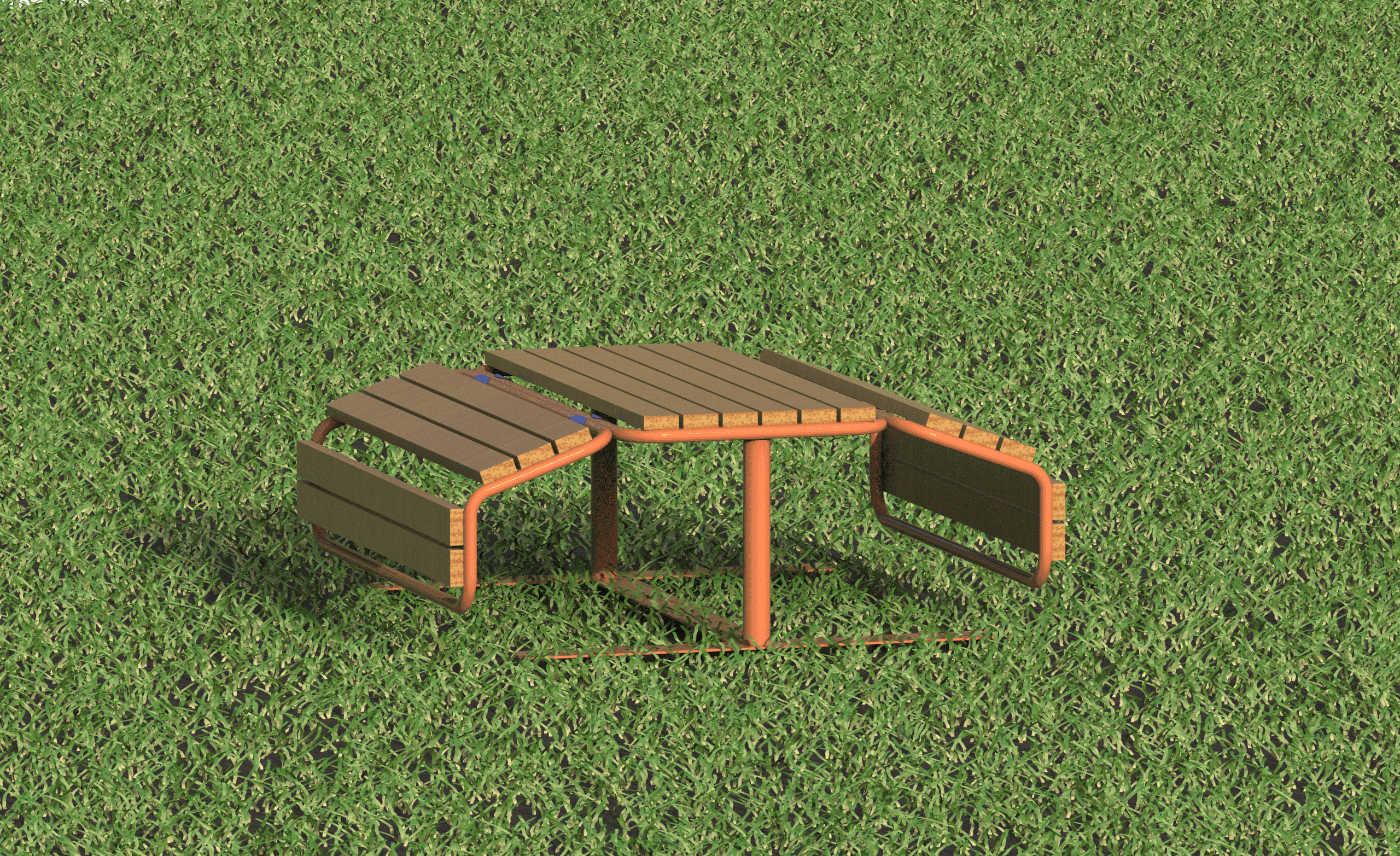
NODE is a modular public seating system designed for
Lietzenseepark, Berlin. A permanent central structure is
combined with two independently adjustable side elements.
By changing the position of the sides, the same seat can
support different ways of resting, sitting and interacting.

01
BOTH SIDES UP
More enclosed and supportive. The raised sides provide
additional support and can work as armrests.

02
ONE UP / ONE DOWN
One side supports the body while the other opens toward
the surrounding landscape.
03
BOTH SIDES DOWN
The most open configuration. It becomes bench-like and
encourages informal, social and playful occupation.
THE MODULAR IDEA
THE CENTRAL STRUCTURE STAYS.
THE SIDES CHANGE.
Instead of designing three different seats, NODE uses one
structural system whose side elements can change position.
The configuration changes the relationship between support,
openness, relaxation and social use.
04
NODE

A modular public seat for Lietzenseepark, Berlin. It doesn't tell people how to sit. It lets them sit the way they want.
SITE RESEARCH & ANALYSIS

A shift from asking “How should a bench look?” to asking “How should a public seat be able to respond?”
WHY NODE
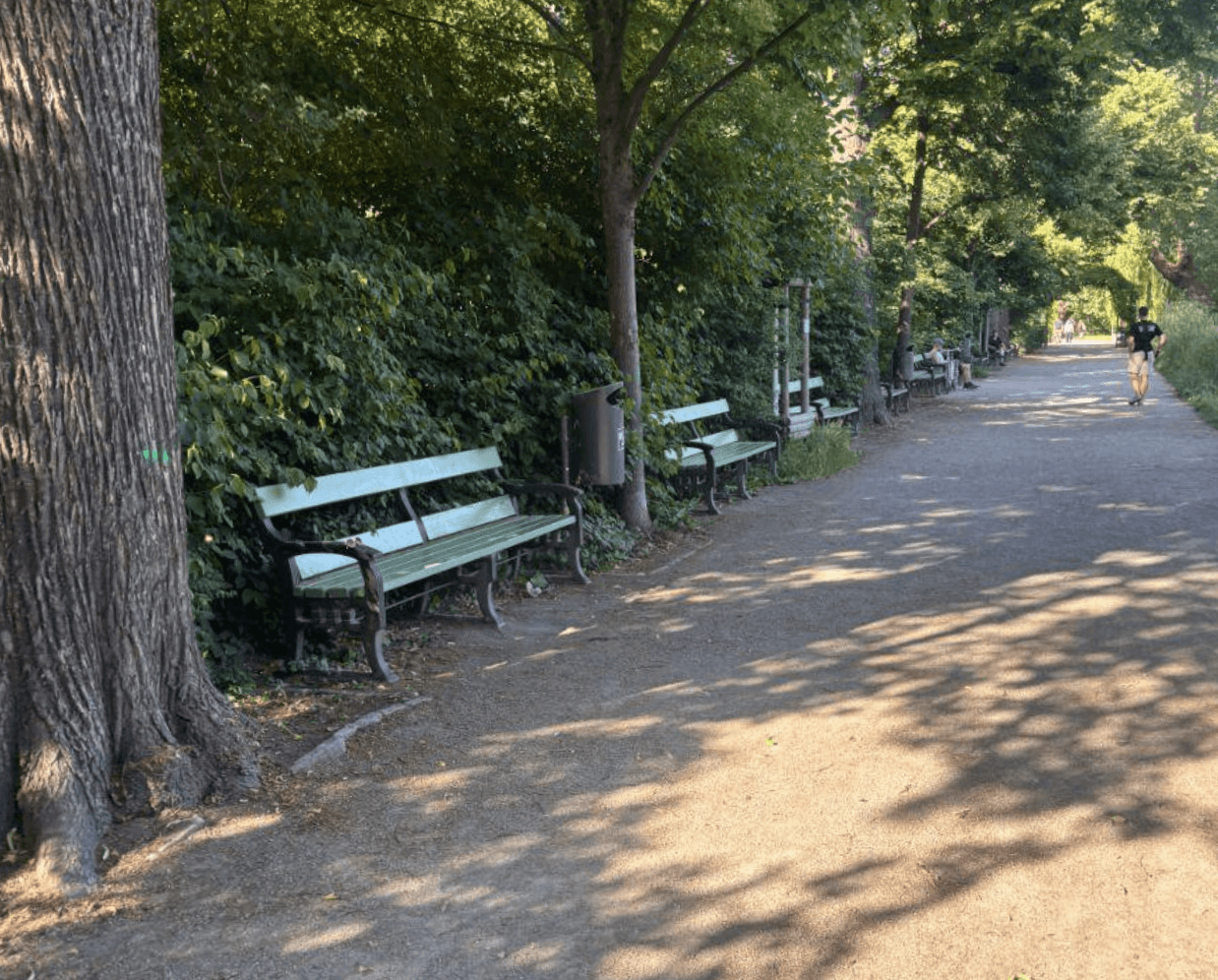
THE PARK ALREADY
SHOWED THE PROBLEM.
PEOPLE WERE NOT ALWAYS
SITTING WHERE THE BENCHES
TOLD THEM TO.
ONE FIXED FORM COULD NOT SUPPORT EVERY WAY OF USING THE SPACE.
THE BENCH WAS FIXED. THE USE
WASN’T.
CAN MODULARITY MAKE PUBLIC
FURNITURE MORE RESPONSIVE
TO CHANGE?
PEOPLE CHOSE THE GRASS
WHEN THE BENCH DIDN’T SUPPORT THE WAY THEY
WANTED TO SIT.


02
03
THE MODULAR IDEA
ONE STRUCTURE. THREE POSITIONS. ENDLESS WAYS TO USE IT.
THERE IS NO ONE WAY TO SIT.
Instead of designing three different seats, NODE uses one structural system whose side elements can change position. The configuration changes the relationship between support, openness, relaxation, and social use.
This project began as research into modularity. I built a framework of four questions to understand what makes a modular object truly adaptable, then designed NODE as an answer to each one.
In the park, people lean, lie back, sit cross-legged, perch on the edge or face each other. A fixed bench chooses one of these for everyone. NODE does the opposite: its sides move, so each person shapes the seat to their own body and moment.
Both sides up: armrests and back support for a short rest, plus a handy point to lean a bike or tie a dog's lead.
CLICK A POSITION TO SEE IT ↓
One up, one down: a reclined lounge to lean back, stay longer and look out over the lake.
Both sides down: an open platform to sit cross-legged, face each other, lie down or play.
BOTH SIDES UP
01
BOTH SIDES DOWN
ONE UP / ONE DOWN
CHANGE HAPPENS
AT THE CONNECTION.

The connection is the physical point where NODE becomes modular. The side elements are attached to the permanent structure through a reversible mechanical connection.


This means the object does not need to be redesigned to
create another configuration. The same structure supports multiple positions.
PERMANENT
WHERE IT NEEDS
TO BE.
NODE applies modularity selectively rather than making every component removable.


THE FORM BECAME A
RELATIONSHIP BETWEEN PARTS.
The result is not three seats. It is one seat designed with the capacity to change.
The permanent structural base provides the strength and stability required for
outdoor public use.
Mechanical fixing allows selected elements to be repositioned, removed, or replaced without redesigning the complete object.
Timber is used where the body touches the furniture, prioritising comfort and thermal performance.
01
GENERAL ARRANGEMENT
Overall geometry / principal views
Plates A, B and C / bolt-hole layout
02
MOUNTING PLATES
03
EXPLODED ASSEMBLY
Component hierarchy / assembly sequence
04
SADDLE CLIP
Detail component / connection logic
A GLIMPSE OF THE RESEARCH
How can modularity support
adaptable public furniture?
DESIGN CONTRIBUTION
Not a bench that tells you how to sit. A seat that lets you decide.
DESIGNING
FOR CHANGE.
NODE
Next Project


04