AgriLift
A vertical farm farmers build themselves.
AgriLift began with a simple question: how can farming infrastructure work with the farmer, rather than forcing the farmer to work around it?
01 — CONTEXT
Understanding the field
Before designing the product, I documented the environment in which it would operate.

From flooding to dripping.
Instead of flooding the soil, AgriLift drips water straight into each pot through a hose that runs along the frame, so water only goes where the plants need it.

Lift the crops.
Not the workload.
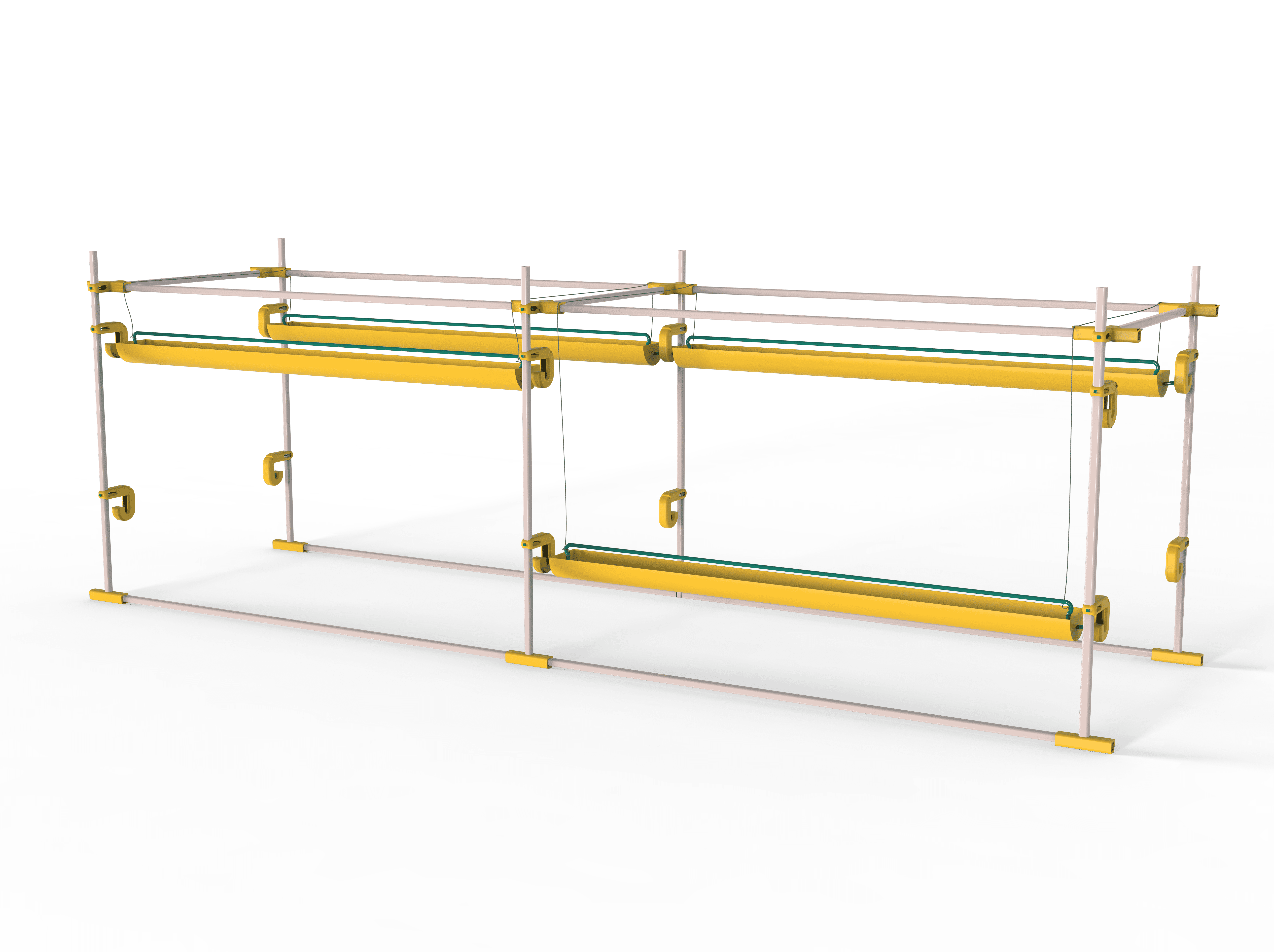
AgriLift transforms the traditional horizontal growing area into an elevated, vertically organized farming system. The planting surfaces can move up and down using a pulley-based mechanism, allowing the farmer to bring the crops to a more comfortable working height.
05 — DESIGN RESPONSE

Standard plumbing pipes, split in half, become the growing trays.
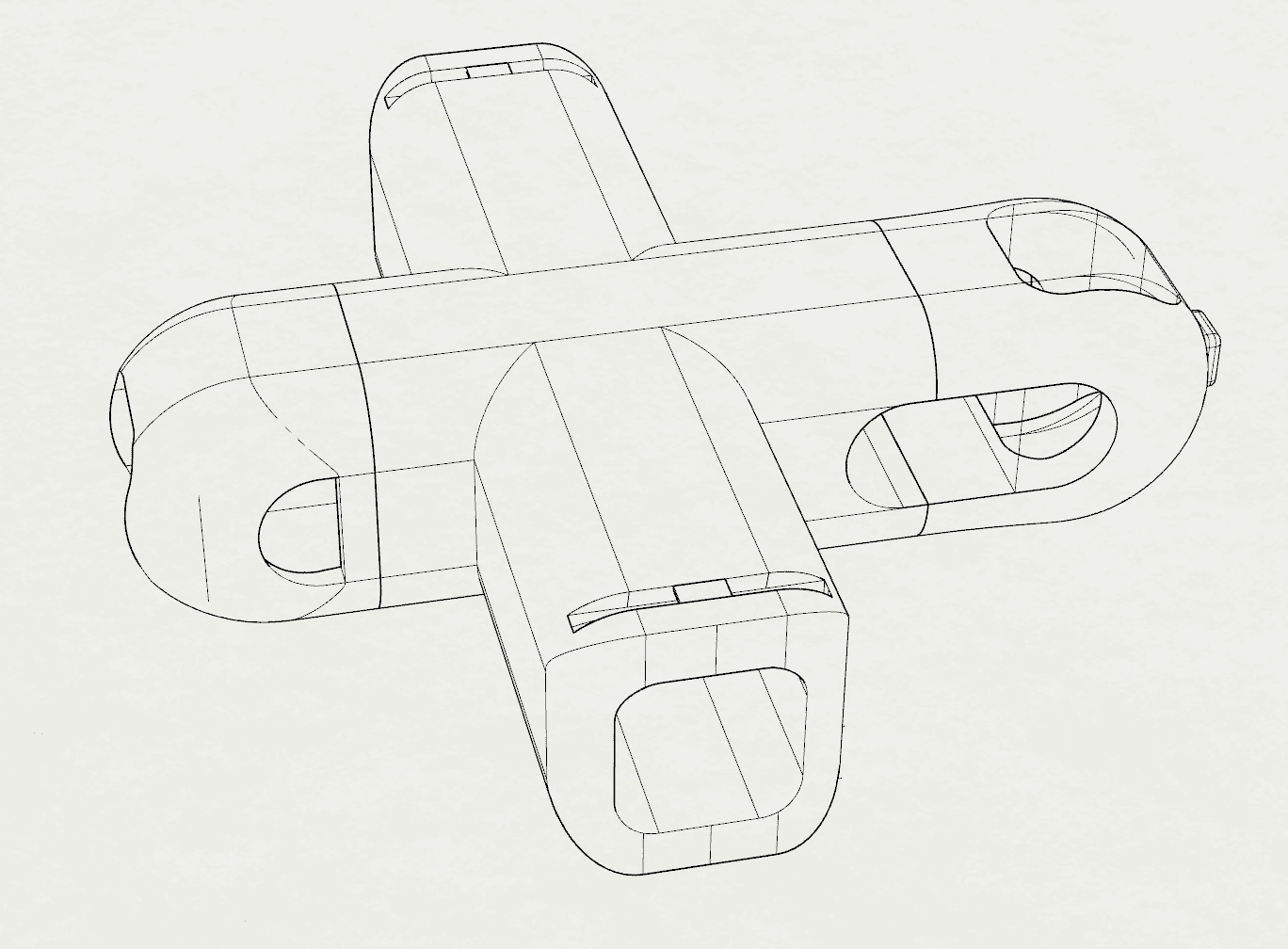
The only custom parts. They join the frame and hold the rope and pulley.
A shading layer helps protect plants from extreme heat while creating a cooler working environment.
Standard tubes from any hardware store form the vertical structure.
01
02
03
04
Frame
Pots
Connectors
Shading
Farmers buy the pipes, tubes and rope locally, add the connectors, and assemble the whole system themselves by following an illustrated step-by-step manual.
One joint.
Many possibilities.
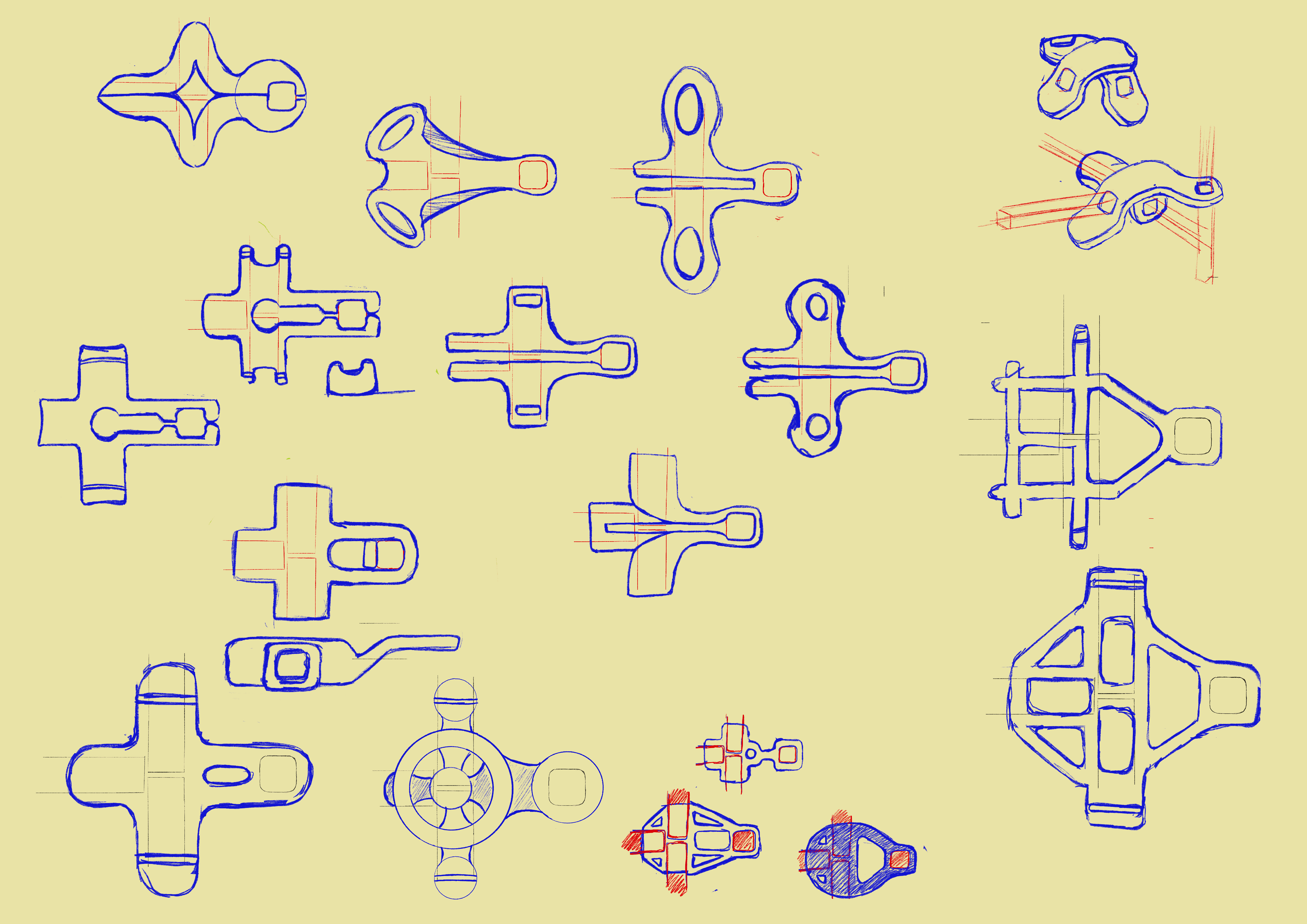
The joint became a key design problem. I explored different geometries, attachment points, and locking methods before developing the final connector.
06 — FORM EXPLORATION




08 — PROCESS
PROCESS / 01
From individual components to the assembled farming structure.
A vertical farming system designed around people.

A self-build vertical farm for small-scale farmers in Egypt, made from off-the-shelf plumbing pipes and rope and held together by connectors I designed.
Product Design
May 2025 / Solo project
02 — FIELD RESEARCH
The field is low.
So the farmer spends the day bent over it.
Planting, maintaining, and harvesting at ground level means repeatedly bending down. The design therefore had to change the working height of the crops without making the system complicated or inaccessible.
03 — THE HUMAN FACTOR

Industrial Design / Research / Agriculture
Egypt


Everything else is off the shelf. The connector is the one part I designed: it locks the frame together and gives the rope and pin a fixed place.
Up when you need it.
Down when you don’t.
The connection is the system.
Building
AgriLift.
A short process film documenting the making of the scale model.
Testing it as a scale model.
The final concept was translated into a physical scale model to test the relationship between the structural frame, growing trays, ropes, joints, and shading layer.
The physical model makes the mechanism tangible: the vertical frame supports the planting areas while the suspended elements can be positioned at different heights.
PRESENTATION
The existing agricultural landscape relies heavily on ground-level cultivation and flood irrigation. Water is distributed across the soil rather than directly to individual plants, making the process less controlled and potentially more demanding in water use.
Next project: Trilume →
From field
research to
a working system.
04 — IRRIGATION

The rope connects the suspended growing components to the pulley mechanism. A dedicated stopper prevents unwanted movement and keeps the planting unit in position.
07 — JOINT & STOPPER


01
More planting area
Using vertical space to increase the productive growing surface.
02
Less bending
Bringing planting areas to a more comfortable working height.
03
Controlled irrigation
Introducing targeted dripping rather than flooding the entire planting area.
04
Adaptable structure
A modular system that can be assembled and extended according to the agricultural context.

Built from off-the-shelf parts
↑ ↓
adjustable planting height
~100 kg
approximate load considered per pot
DIY
03
Controlled irrigation
Introducing targeted dripping rather than flooding the entire planting area.
04
Adaptable structure
A modular system that can be assembled and extended according to the agricultural context.