WHAT IF
THE WAY
WE EAT
CHANGED?
The 2050 Kitchen is a research-based speculative design project exploring how future environmental, cultural, and technological conditions could reshape one of the most familiar spaces in our lives.
SOURCE: UNEP FOOD WASTE INDEX REPORT 2024
In 2022, 1.05 billion tonnes of food were wasted. 60% of it was thrown away at home, in kitchens like ours.
01
SCARCITY
How might limited resources change the way we prepare, consume, and value food?
02
CULTURE
How do changing food cultures transform the rituals and objects of the kitchen?
03
MATERIAL
What happens when the materials surrounding everyday objects need to be reconsidered?
04
ADAPTATION
How can products respond to new behaviours instead of forcing old habits to continue?
A CLOSED LOOP
Next Project
Rather than predicting what will happen, the
project creates a possible future and makes it tangible through an exhibition and a collection of designed objects.
A FUTURE BUILT
FROM QUESTIONS.


01 EcoVitalize
02 GreenPrint
Utensils
03 GreenPrint
Food
NOTHING GOES TO WASTE.
WHAT IF FOOD WASTE BECAME PART OF THE FOOD SYSTEM?
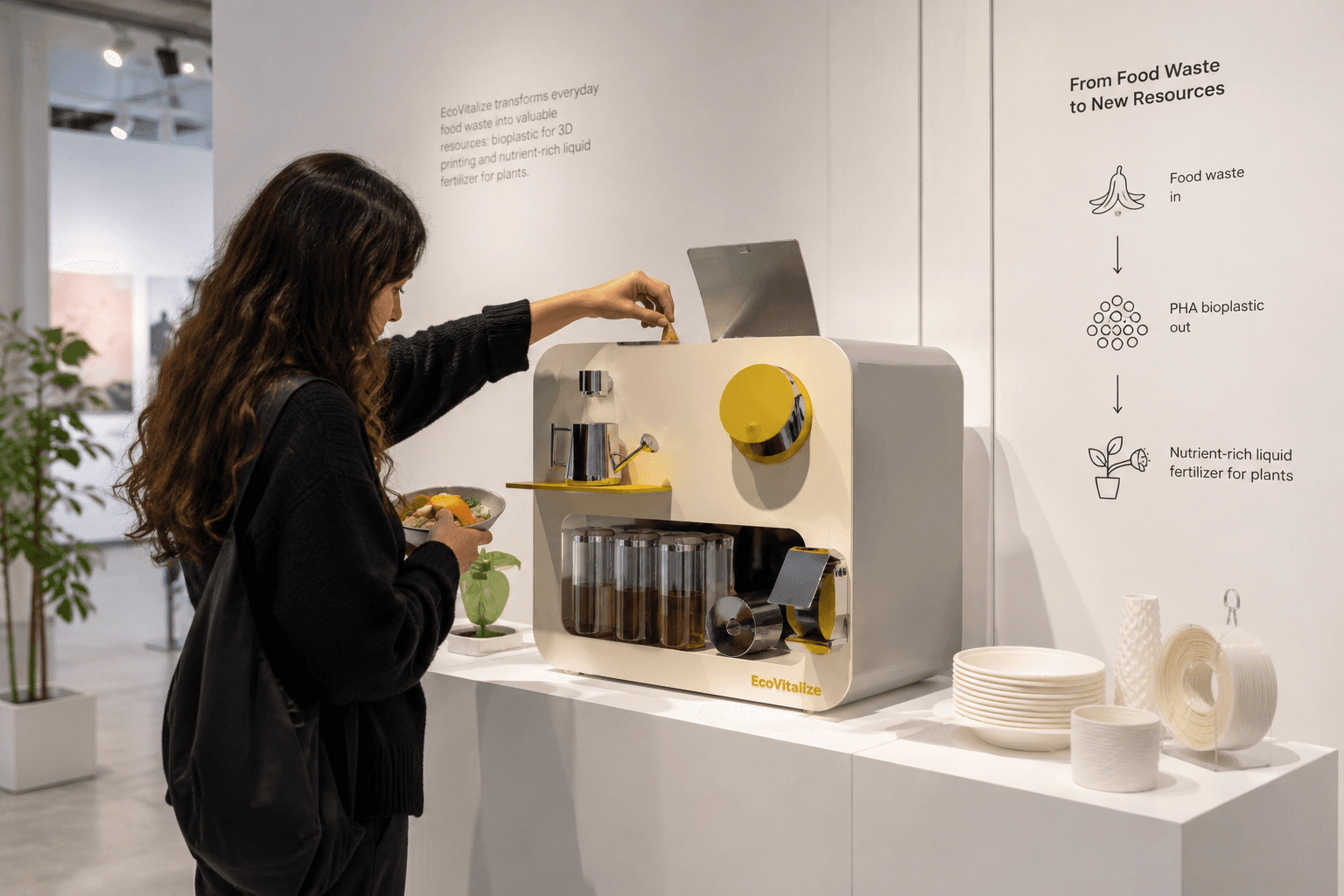
EcoVitalize is where the cycle begins. It addresses what happens after food has been eaten, proposing a different relationship with what the kitchen normally considers waste.
Together with GreenPrint Utensils and GreenPrint Food, it closes the loop, shifting the focus from producing and consuming food to what happens afterwards.
EcoVitalize

DESIGNING
THE AFTER.
By introducing a dedicated waste-processing object into the kitchen, the project makes the final stage of food consumption visible.
THE KITCHEN DOESN’T END WHEN THE MEAL DOES.
Rather than treating food waste as the end of a process, EcoVitalize imagines a future kitchen where waste becomes part of a circular domestic system — connecting food consumption, waste management and resource recovery within the home.
EcoVitalize is a speculative food-waste appliance designed for the kitchen of 2050. It transforms everyday food waste into valuable resources: PHA bioplastic for 3D printing and nutrient-rich liquid fertilizer for plants.
TECHNOLOGY BECOMES
DOMESTIC.
The product was developed around the idea that future technology should not necessarily feel cold or inaccessible. Form, colour, and visibility make the machine part of the domestic environment.
WHAT IF THE KITCHEN COULD PRODUCE ITS OWN UTENSILS?
Instead of treating tableware as permanent objects that are simply purchased and replaced, the system proposes a more adaptable relationship between material, production, and use.
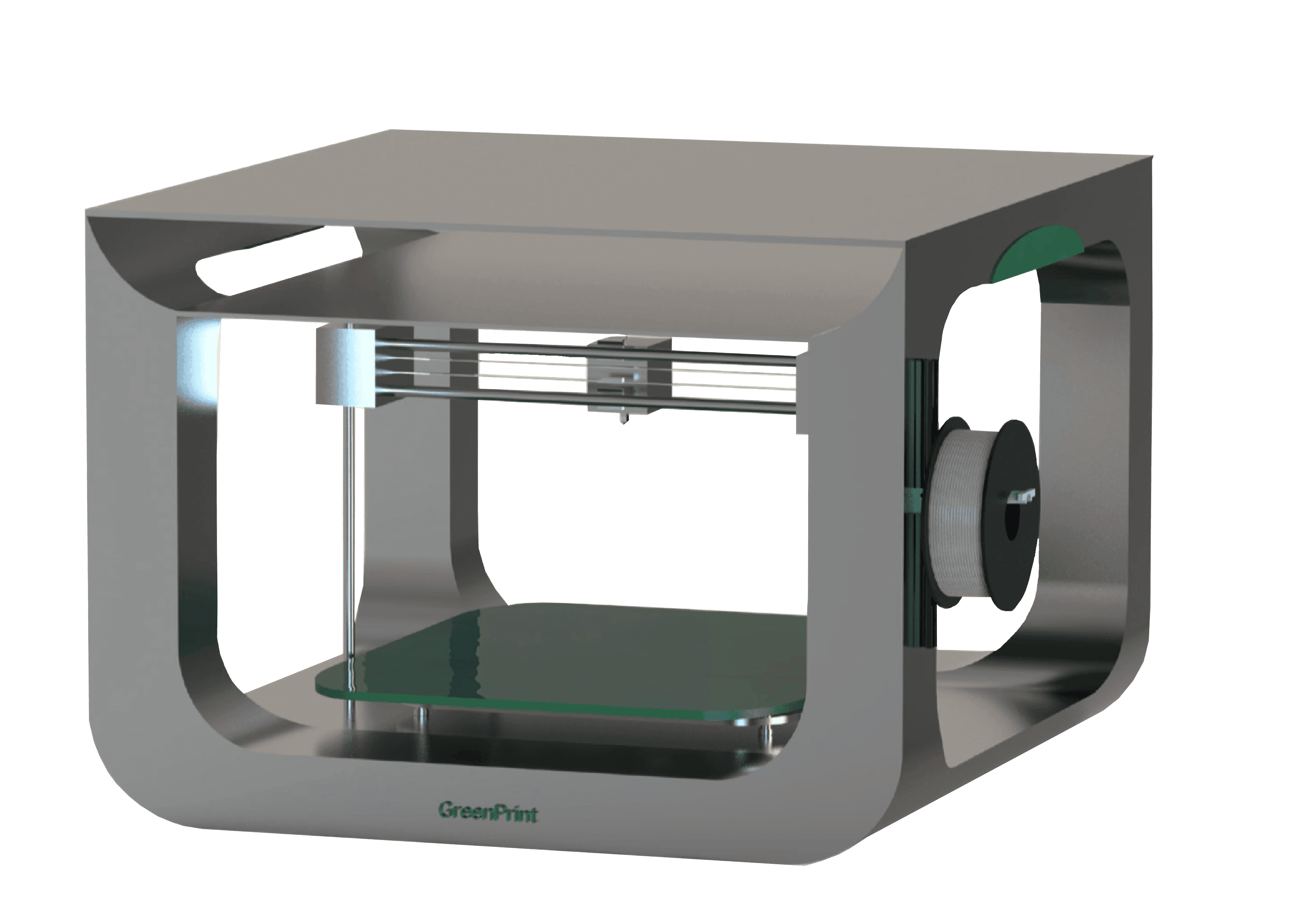
The second product extends the logic of fabrication beyond food. Cups, plates, and utensils can be produced directly in the kitchen, using bioplastic generated by EcoVitalize as a printable material.

GREENPRINT
Utensils
The GreenPrint Utensils printer produces everyday tableware from bioplastic generated through the EcoVitalize system. Designed to be reused throughout their life, the printed objects can eventually be returned to the soil, where the material breaks down naturally after disposal. A material cycle turns food waste into something useful again — from waste, to material, to object, and back to the earth.
The integrated tray catches each freshly printed utensil and makes it easy to move directly from the printer to the kitchen counter or dining table. The tray turns the printed object from something being made into something ready
to use.
PRINT. CARRY. SERVE.
Three products, one cycle. 01 EcoVitalize turns food waste into PHA bioplastic and nutrient-rich liquid fertilizer for plants. 02 GreenPrint Utensils prints that bioplastic into plates and cups that return to the soil after use. 03 GreenPrint Food prints meals at home, and whatever is left goes back to 01.
A RESEARCH-BASED SPECULATIVE DESIGN PROJECT IMAGINING HOW FOOD, SCARCITY, CULTURE, AND TECHNOLOGY COULD TRANSFORM THE DOMESTIC KITCHEN.
THE 2050
KITCHEN
THE SCENARIO

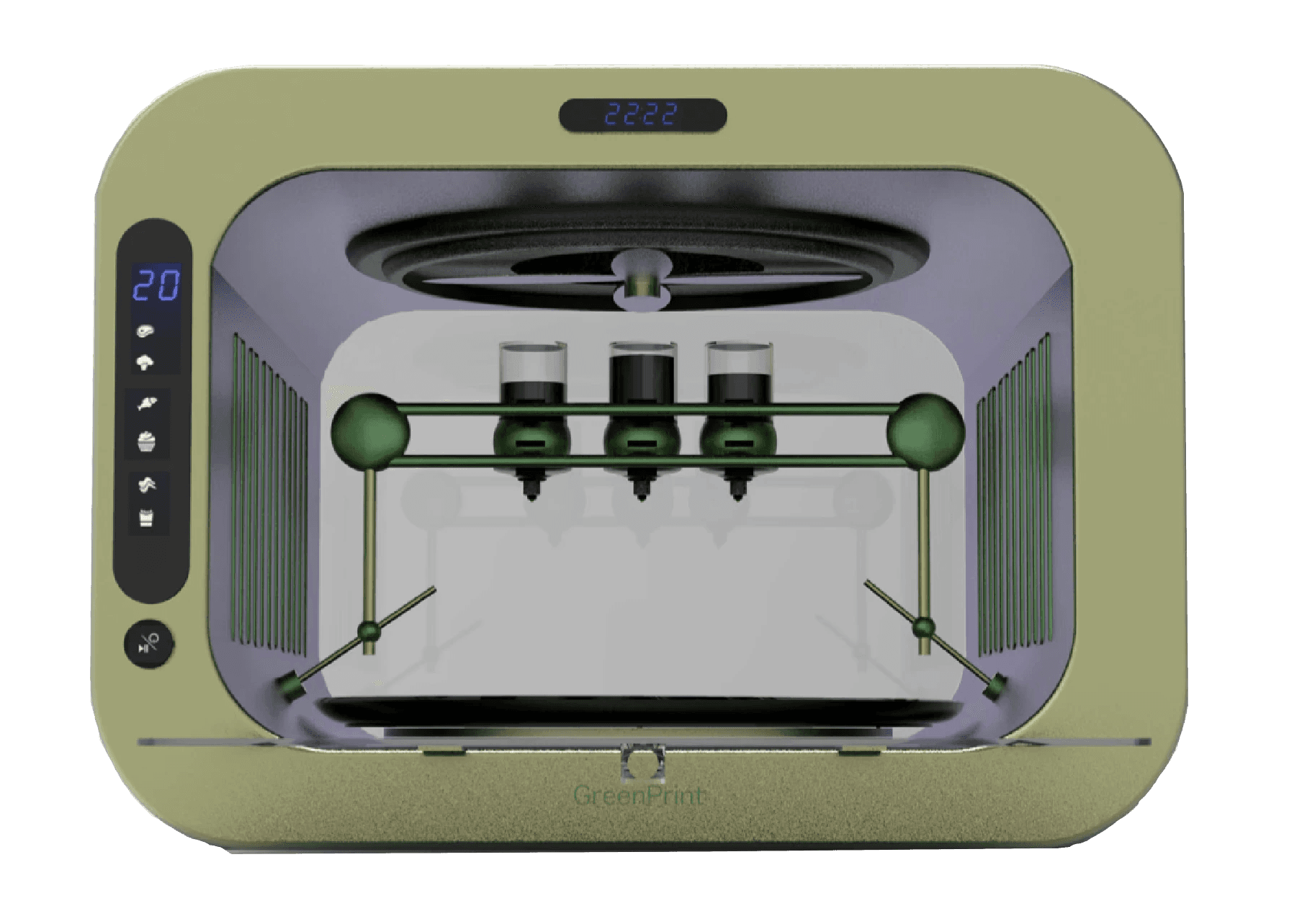
An internal fan, heating walls, anti-stick and removable plates, a movable printing system, and an integrated tray support the complete process, while a touchscreen provides information and control.
Scaled model

Food scarcity, changing consumption patterns, material limitations, and new technologies become the starting points for imagining a different domestic future.


The project is conceived not only as a collection of products, but as an exhibition.
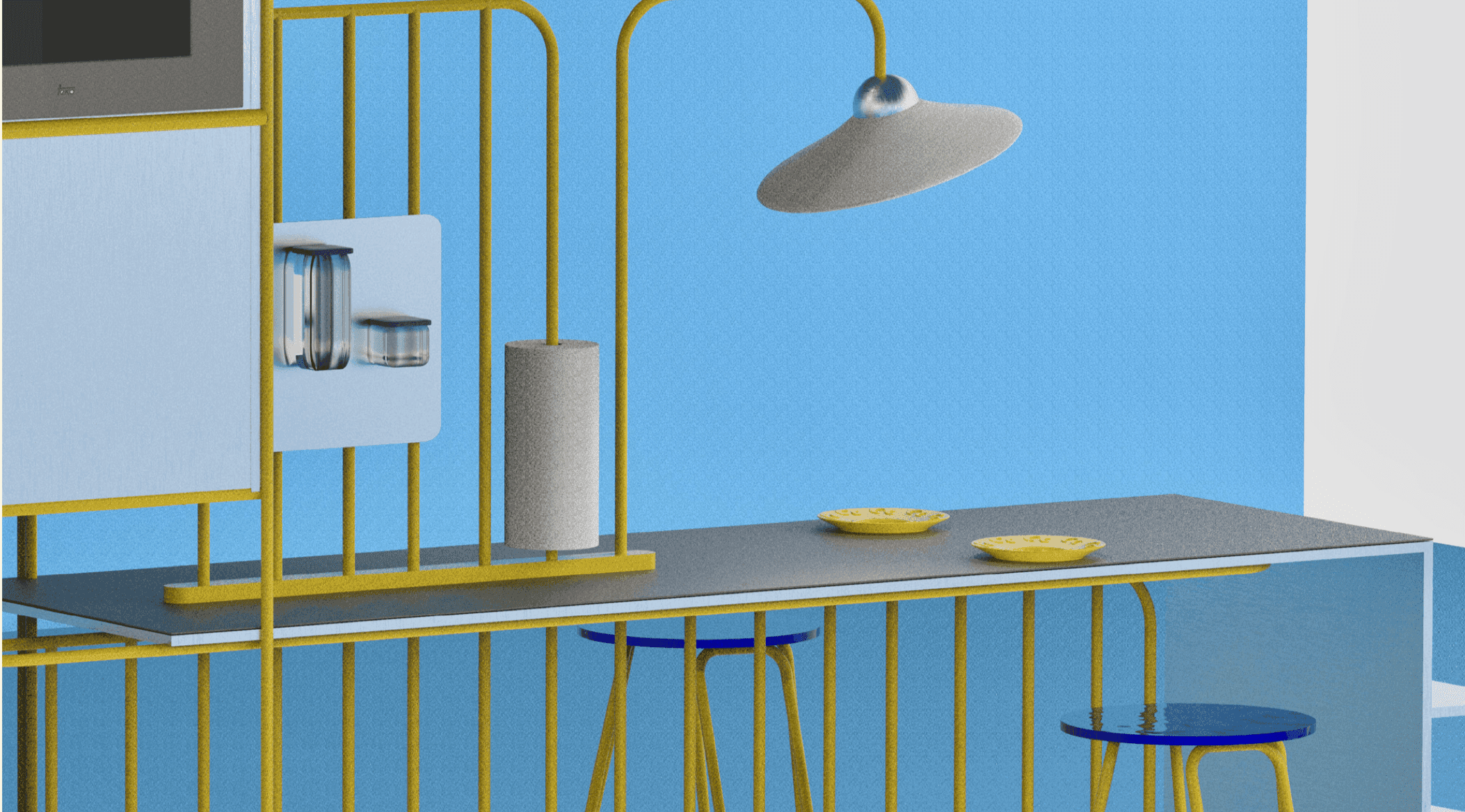
The complete kitchen creates an environment in which visitors can encounter a possible future of domestic life at human scale.

AN EXHIBITION YOU CAN WALK THROUGH.
ONE KITCHEN.
THREE RESPONSES.
FROM FOOD WASTE TO
EVERYDAY TABLEWARE.

→
The future of food is not only what we cook, but what we choose to leave behind.

GREENPRINT
Food
WHAT IF FOOD COULD BE FABRICATED DIRECTLY IN THE KITCHEN?
GreenPrint imagines a future where food can be produced directly at home to respond to the shortages expected by 2050. Using specially developed food solutions, the printer recreates the taste, smell, and texture of familiar foods, while users can connect to it digitally and send recipes to be produced at home. Temperature-controlled printing, two integrated side burners and a built-in cooling system allow the machine to prepare both hot and cold foods.
WHAT WILL WE
EAT TOMORROW?
2050
The project does not attempt to predict one definitive future.
It asks us to imagine what our everyday objects might become when the conditions around them change.
The 2050 Kitchen turns that question into an environment that can be entered, observed and experienced.
This 1:2 scale model translates the 2050 Kitchen from a digital concept into a physical environment. Building it at half scale let me test its spatial relationships, proportions, materials and how the elements interact.

SPECULATIVE DESIGN / INDUSTRIAL DESIGN / EXHIBITION
May 2024 / SOLO PROJECT