FRANKFURT
APRIL 2026
FRANKFURT
Next Project
Next Project
Understanding the conditions.


The furniture enabled flexible workshop formats for creative and educational activities.
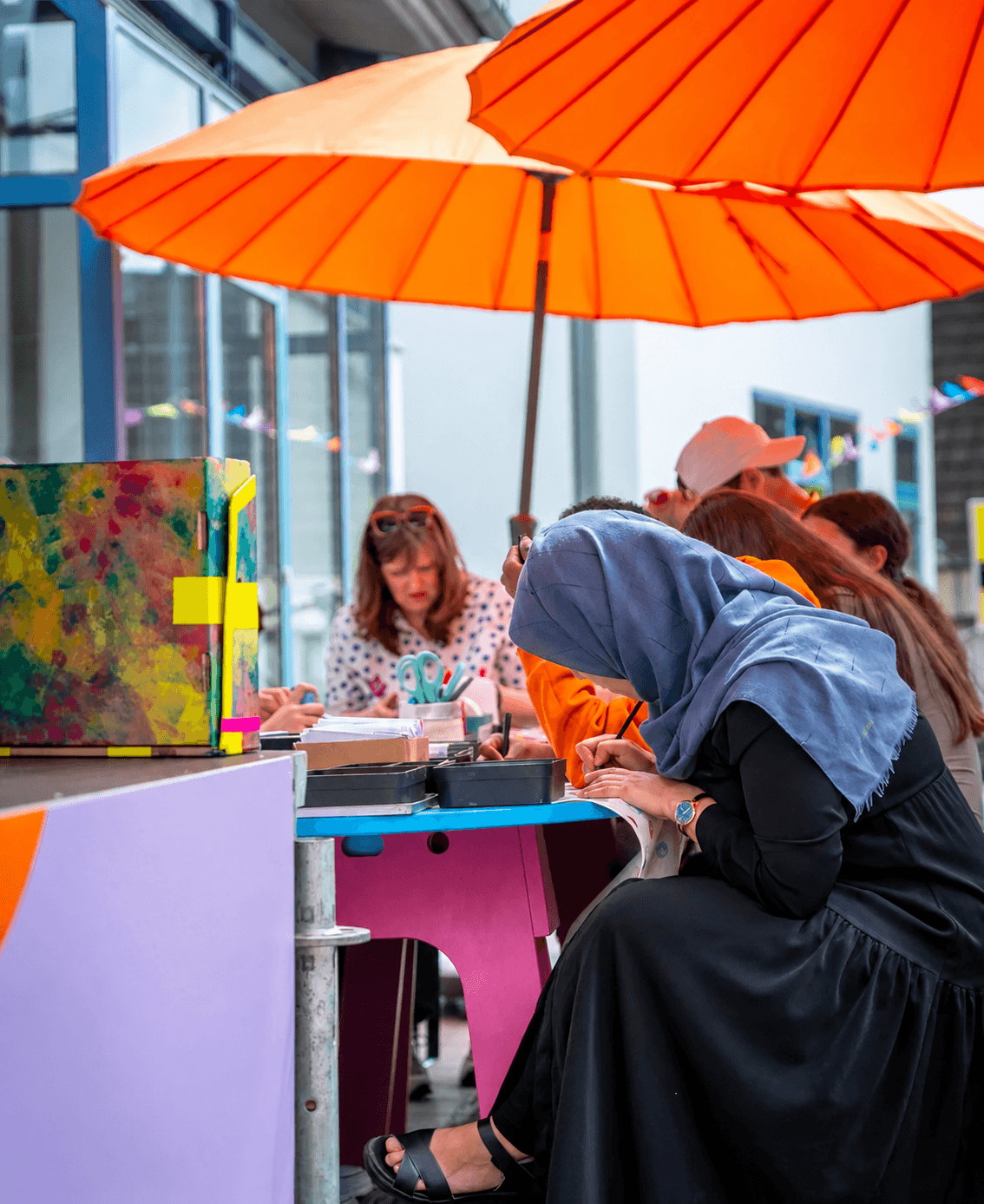
Modular stools supported informal conversations and intergenerational participation during Democracy Kiosk events.
Designed to
move, assemble, adapt.
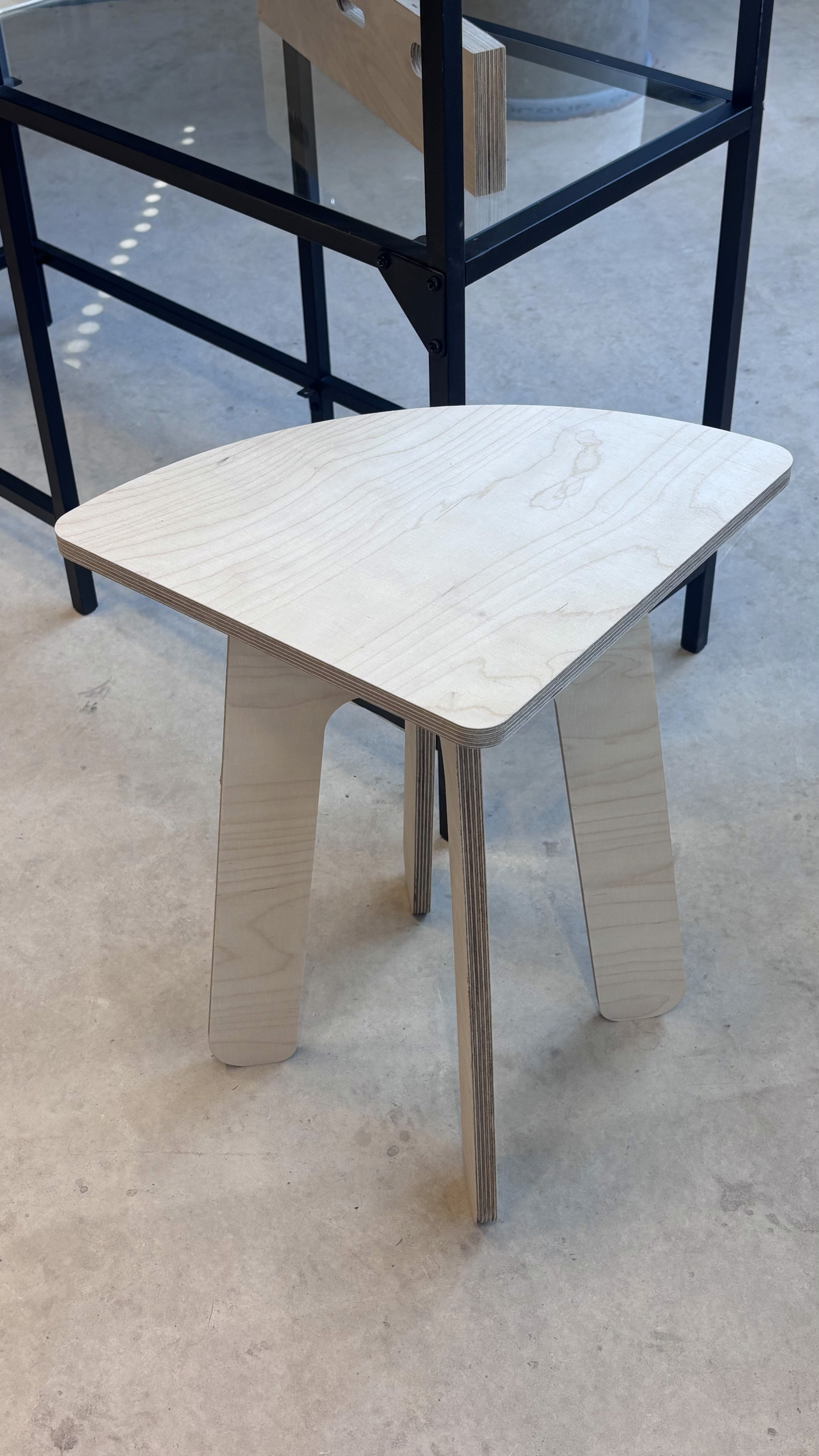
The stools were developed as CNC-cut flat-pack modules using integrated slot-fit joints for simple assembly and transportation.


Each element was designed to work independently while remaining part of one adaptable public system.

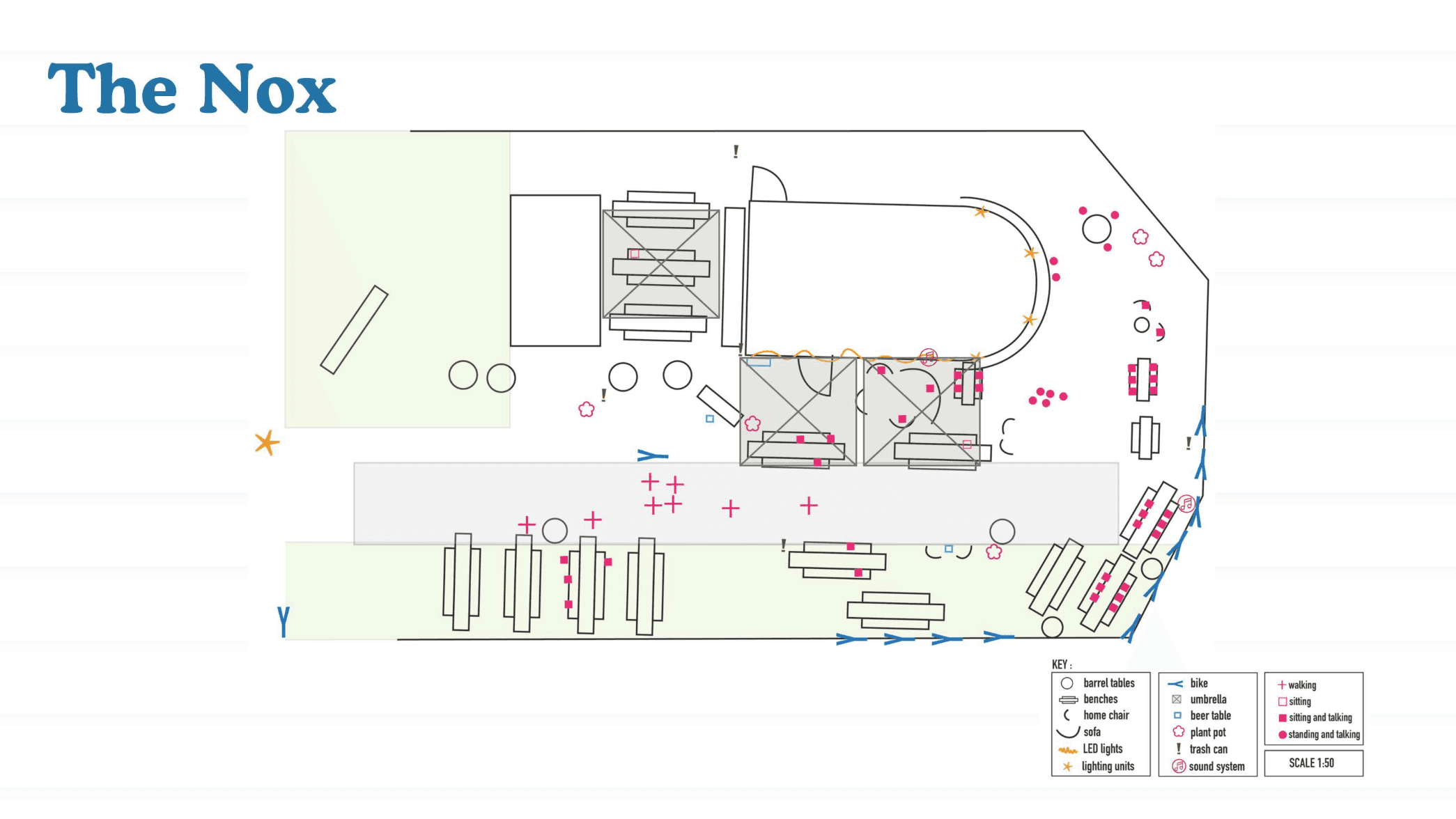
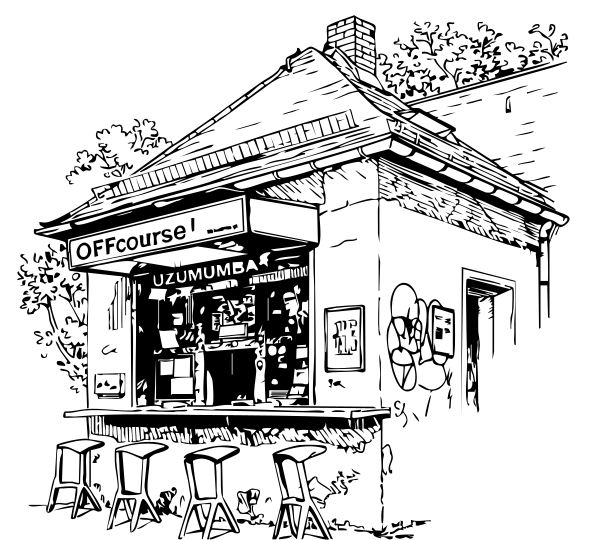
Eleven kiosk locations were mapped and studied to understand how the furniture system would operate across different urban conditions.
MAPPING / STAKEHOLDER INTERVIEWS / SITE RESEARCH
The system combines seven interconnected elements supporting workshops, discussions, storage, and public engagement.
TESTING / PROTOTYPING
From prototype
to system.
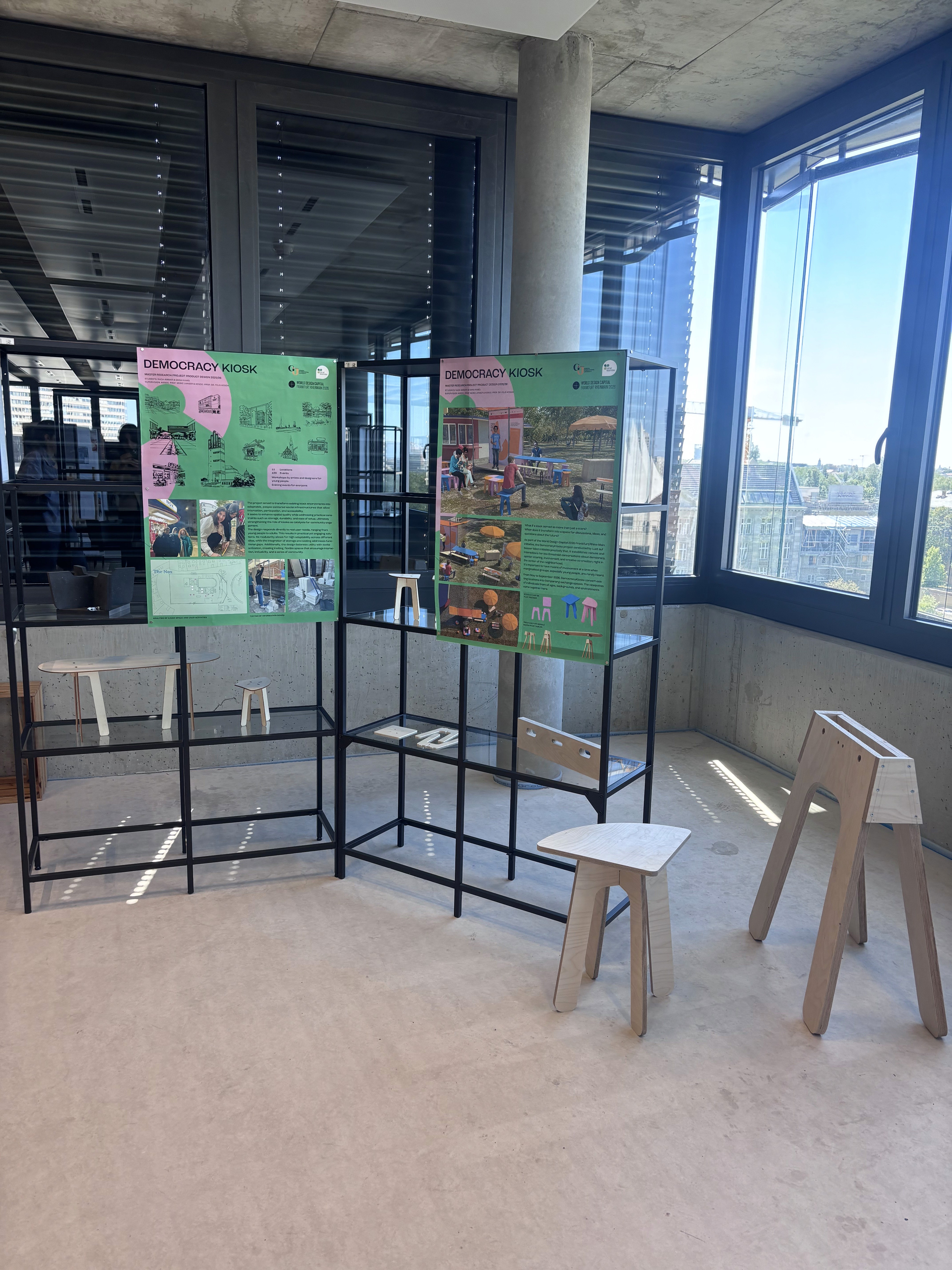

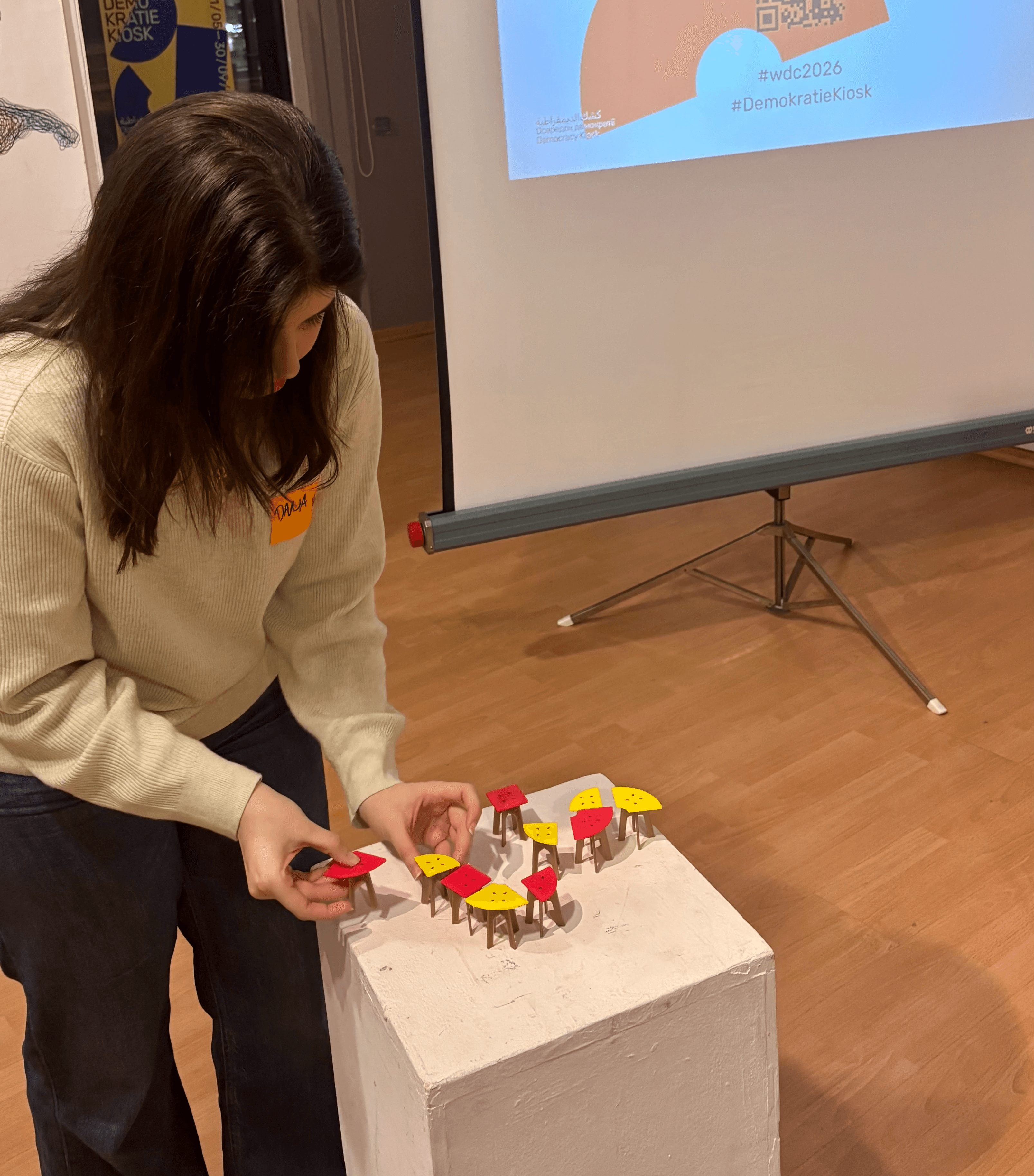
The furniture system was developed through prototyping and testing, with particular attention to mobility, assembly, and changing public-space conditions.
From furniture
to participation.
Seven elements.


THE SYSTEM / PUBLIC SPACE
11
01
04
02
Different Locations.
One system.
Safety and liability shaped the furniture's dimensions, construction, and placement.
Public visibility was essential to attract participants and make the kiosks feel open and approachable.
Storage and transport were recurring challenges, requiring the furniture to remain compact, movable, and easy to handle.
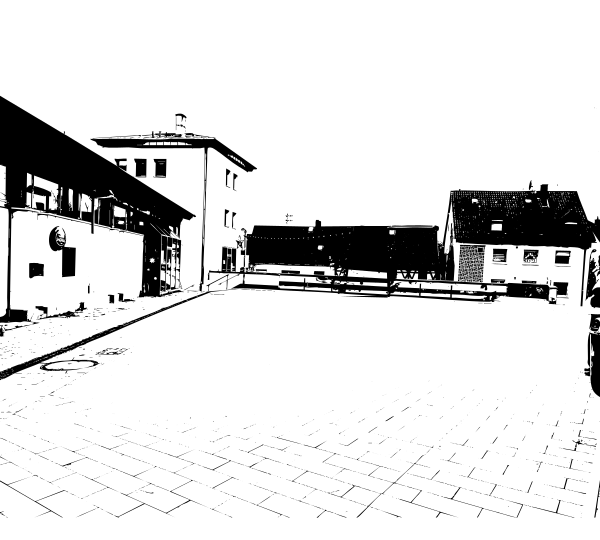
Workshop layouts needed to adapt to different sites, activities and numbers of participants.


03
NADA AMMAR

WORLD DESIGN CAPITAL 2026
Democracy
kiosks
PUBLIC DESIGN SYSTEM
FRANKFURT RHEINMAIN 2026

A modular public furniture and workshop system for eleven Democracy Kiosks across Frankfurt.
The project was developed for the World Design Capital Frankfurt RheinMain 2026, connecting public furniture with democratic participation, workshops, and everyday urban life.
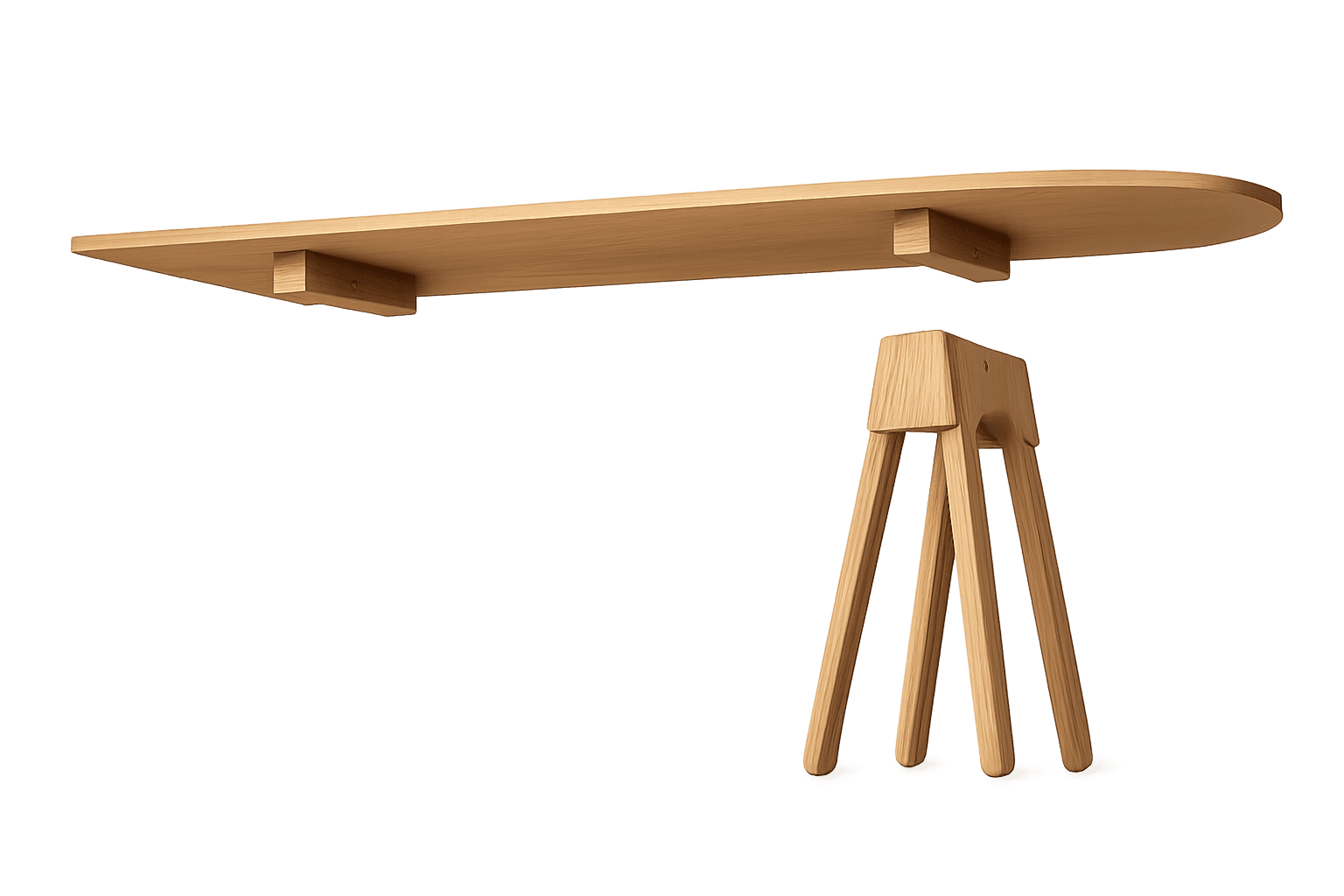
ATTACHABLE TABLE
✥ GRAB THE PIECES AND MOVE THEM AROUND
Attachments that
adapt to
the space.
The scaffolding system supported workshops and public events through integrated tables and accessories.

This project was co-designed with Prof. Meike Langer & Dana Kamel


